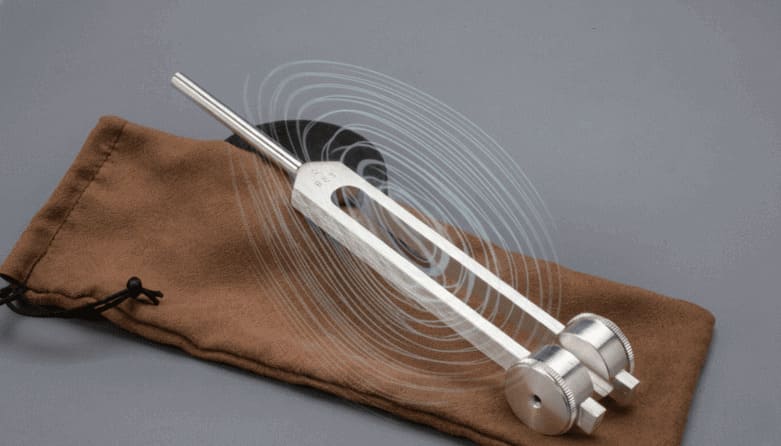
If you want the best 128 Hz Tuning Forks, then check first if made from wrought aluminum alloy. This type will give you the best frequency vibration to get the benefits you want.
Here are some recommended vendors if you refuse to get scammed.
🏆 TOP 3 128Hz Tuning Fork Recommendations for 2025
Now that you understand the science and the magic behind the 128Hz tuning fork, you’re probably wondering which one to buy. That’s why we’ve researched for you.
Omnivos Therapeutics (Quality Manufacturing Leader)
Omnivos stands out for USA manufacturing, impact-resistant aluminum alloy construction (26% harder than competitors), and rigorous quality control with triple inspection processes. The ±0.5% frequency accuracy matches premium competitors while offering competitive pricing.
✓ Pros:
- USA manufacturing with quality emphasis
- Impact-resistant aluminum alloy (26% enhanced hardness)
- Triple inspection quality control process
- Competitive pricing for premium quality
- Professional healthcare professional targeting
⚠ Cons:
- Less brand recognition than Biosonics
Target Users: Quality-conscious practitioners, USA-made product preference, healthcare professionals, users seeking premium quality at moderate pricing.
Biosonics (Overall Market Leader)
Biosonics consistently demonstrates superior quality through machine-cut aluminum construction, ±0.5% frequency accuracy, and positive customer feedback showing 5/5 ratings. The brand’s established reputation in the therapeutic community, combined with hand-finished construction and comprehensive usage guidance, positions it as the premium choice for serious practitioners.
✓ Pros:
- Proven therapeutic market leadership
- Superior construction quality (machine-cut + hand-finished)
- Excellent customer satisfaction (5/5 ratings)
- Established professional endorsements
- Comprehensive therapeutic application guidance
⚠ Cons:
- Premium pricing
Target Users: Professional therapeutic practitioners, serious students of sound healing, and users prioritizing quality and established reputation.
ADC (Best Value for Medical)
ADC provides exceptional value for professional medical applications, offering medical-grade specifications including non-magnetic, corrosion-resistant aluminum alloy construction. The brand’s established professional adoption in ENT clinics and neurological practices validates quality for diagnostic applications.
✓ Pros:
- Exceptional price-to-quality ratio for medical applications
- Medical-grade material specifications
- Established professional medical adoption
- Non-magnetic, corrosion-resistant construction
- Proven reliability in clinical settings
⚠ Cons:
- Not specifically designed for therapeutic applications
Target Users: Medical facilities, educational institutions, diagnostic practitioners, budget-conscious professional users.
🎵 What is a 128Hz Tuning Fork? The Foundation of Sound Healing
At its core, a 128Hz tuning fork is a precision-calibrated instrument that vibrates at 128 cycles per second when struck. But this simple definition belies its profound potential. In the world of sound therapy, the 128Hz frequency is a cornerstone, a foundational tone that resonates deeply with the human body.
Weighted vs. Unweighted: A Critical Distinction
When you begin your search for a 128Hz tuning fork, you’ll immediately encounter two main types: weighted and unweighted. Understanding the difference is crucial to selecting the right tool for your needs.
| Attribute | Weighted (e.g., Otto 128Hz) | Unweighted (e.g., 256Hz, 528Hz) |
| Prong design | Weights at ends; lower resonance center | No weights; lighter prongs |
| Primary output | Strong tactile vibration; lower tone | Clear tone; longer sustain; less felt vibration |
| Application | Direct body placement on joints, muscles, acupoints | Off-body in biofield; near ears for auditory work |
| Clinical/therapeutic use | Pain relief, muscle relaxation, grounding, proprioceptive input | Chakra balancing, energetic clearing, meditative focus |
A Rich History: From Music to Medicine
The tuning fork was invented in 1711 by British musician John Shore. Its original purpose was purely practical: to provide a standard pitch for tuning musical instruments. However, it wasn’t long before the medical community recognized its potential.
In the 19th century, physicians began using tuning forks for neurological and audiological examinations. The Rinne and Weber tests, which use 128Hz, 256Hz, and 512Hz tuning forks to assess hearing loss, are still used today. The 128Hz tuning fork, in particular, became a standard tool for testing vibratory sensation, helping to diagnose conditions like peripheral neuropathy.
💎 Why 128Hz Matters: The “Miracle” Frequency for Body and Mind
The Power of Grounding
In our chaotic, overstimulated world, many of us feel disconnected and ungrounded. The 128Hz tuning fork can help to bring us back to earth. When you place the vibrating fork on your body, you can feel the sensation deep in your bones, anchoring you in the present moment and creating a sense of calm and stability.
Pain Relief and Deep Relaxation
One of the most well-documented benefits of the 128Hz tuning fork is its ability to relieve pain and promote deep relaxation. This is due to increased blood flow and nitric oxide production, the gate control theory of pain, and parasympathetic nervous system activation.
A Bridge Between Physical and Energetic
The 128Hz tuning fork is unique in its ability to bridge the gap between the physical and the energetic. In sound healing traditions, the 128Hz frequency is associated with the Root Chakra, creating a strong foundation for your overall health and well-being.
🔬 The Science of Sound Healing: How 128Hz Works its Magic
While the experience of using a 128Hz tuning fork can feel magical, the principles behind its effectiveness are grounded in science. The therapeutic effects of sound and vibration have been studied for decades, and we now have a growing body of evidence to support their use in a variety of clinical and wellness settings.
Resonance and Entrainment: The Language of Vibration
Everything in the universe is in a state of vibration. From the smallest atom to the largest galaxy, everything has its own unique resonant frequency. Our bodies are no exception. Each of our organs, tissues, and cells has its own optimal frequency of vibration. When you use a 128Hz tuning fork on your body, you are introducing a stable, coherent frequency into your energetic field. Through the principles of resonance and entrainment, your body can begin to “tune in” to this frequency, returning to a state of balance and harmony.
Mechanotransduction: From Vibration to Cellular Change
Mechanotransduction is the process by which cells convert mechanical stimuli (like vibration) into biochemical signals. Our bodies are equipped with specialized sensory receptors called mechanoreceptors that are designed to detect different types of mechanical stimuli, including pressure, touch, and vibration.
| Receptor | Peak Sensitivity | Functional Role | Therapeutic Relevance |
| Merkel disks | 5–15Hz | Fine touch, static deformation | Gentle, low-frequency tactile engagement |
| Meissner corpuscles | 20–50Hz | Motion detection, low-frequency vibration | Modulate proprioception; support motor control |
| Pacinian corpuscles | 60–400Hz (max ~240Hz) | Acceleration, high-frequency vibration | Strong vibratory input; potential vagal activation; gate-control analgesia |
🚨 The Dark Side of the Fork: A Buyer’s Guide to Scam Prevention
Warning: Quality Matters
The rising popularity of tuning forks has a dark side: a flood of low-quality, counterfeit, and downright fraudulent products on the market. These “scam forks” not only waste your money, but they can also be ineffective and even harmful.
Material Matters: Wrought vs. Cast Aluminum
The single most important factor in the quality of a tuning fork is the material it’s made from. The vast majority of high-quality tuning forks are made from wrought aluminum alloy. This type of aluminum is strong, lightweight, and has excellent vibrational properties.
| Attribute | Wrought Aluminum (e.g., 6061, 7075) | Cast Aluminum (e.g., 3xx.x series) |
| Formation process | Mechanical working: extrusion, rolling, forging | Molten metal poured into molds |
| Typical defects | Fewer external/internal defects; better dimensional accuracy | Shrinkage effects, hydrogen porosity, higher defect prevalence |
| Tensile strength | Generally higher | Generally lower |
| Acoustic behavior | Longer sustain; cleaner tone; stable fundamentals | Shorter sustain; contaminated overtones; inconsistent frequency |
Red Flags to Watch For
🚫 Material Transparency
- What to look for: No alloy/temper; vague “aluminum”; heavy, rough finish
- Why it matters: Likely cast/zinc alloy; lower sustain and frequency stability.
🚫 Accuracy Claims
- What to look for: “Exactly 128 Hz” with no tolerance; no calibration documentation
- Why it matters: Frequency deviation undermines therapeutic and diagnostic use.
🚫 Review Patterns
- What to look for: Lots of vague five-star reviews; variation abuse; sudden review surges
- Why it matters: High probability of manipulation; ignore crowdsourced quality signals.
✅ How to Choose Your Perfect 128Hz Tuning Fork: A Buyer’s Checklist
Now that you know what to look for, you’re ready to choose your perfect 128 hertz tuning fork. Here’s a simple checklist to guide you through the process:
- Prioritize Reputable Brands: Stick with the brands that have a proven track record of quality and customer satisfaction. Our top 3 recommendations – Biosonics, Omnivos, and ADC – are a great place to start.
- Read the Fine Print: Pay close attention to the product specifications. Look for information about the material (wrought aluminum is best), the frequency accuracy (±0.5% or better), and the manufacturing process (machined is better than cast).
- Don’t Be Fooled by Marketing Hype: Be wary of claims like “miracle cure” or “instant enlightenment.” A high-quality tuning fork is a powerful tool, but it’s not a magic wand. Look for sellers who provide realistic, evidence-based information.
- Trust Your Gut: If something feels off about a product or a seller, it probably is. Trust your intuition and don’t be afraid to walk away from a deal that seems too good to be true.
💬 Real Voices, Real Experiences: What the Community is Saying
Don’t just take our word for it. Here’s what real people are saying about their experiences with the 128Hz tuning fork:
“I’ve been using the 128 hertz tuning fork with my clients for years, and the results are consistently amazing. It’s incredibly effective for releasing tension in the neck and shoulders, and I’ve also had great success with it for reducing anxiety and promoting a sense of calm.”– Sound Healing Practitioner, Facebook Group
“I was skeptical at first, but after just one session with the 128Hz tuning fork, I was a believer. I had been suffering from chronic low back pain for years, and nothing seemed to help. But after the session, my pain was significantly reduced, and I felt a sense of lightness and ease that I hadn’t felt in years.”– Biofield Tuning Client, Therapeutic Session
“I bought a cheap tuning fork on Amazon, and it was a total waste of money. The vibration was weak, the sound was tinny, and it felt like a toy. I finally invested in a high-quality fork from a reputable brand, and the difference is night and day. It’s a powerful tool, and it’s worth it to invest in a good one.”– Sound Healing Forum User, Community Review
Your Journey to Healing Begins Now
You are no longer standing at a crossroads of confusion and doubt. You are now armed with the knowledge and the wisdom to make an informed choice. Whether you are seeking relief from physical pain, a respite from a racing mind, or a deeper connection to your own inner wisdom, the 128 hertz tuning fork can be your guide.