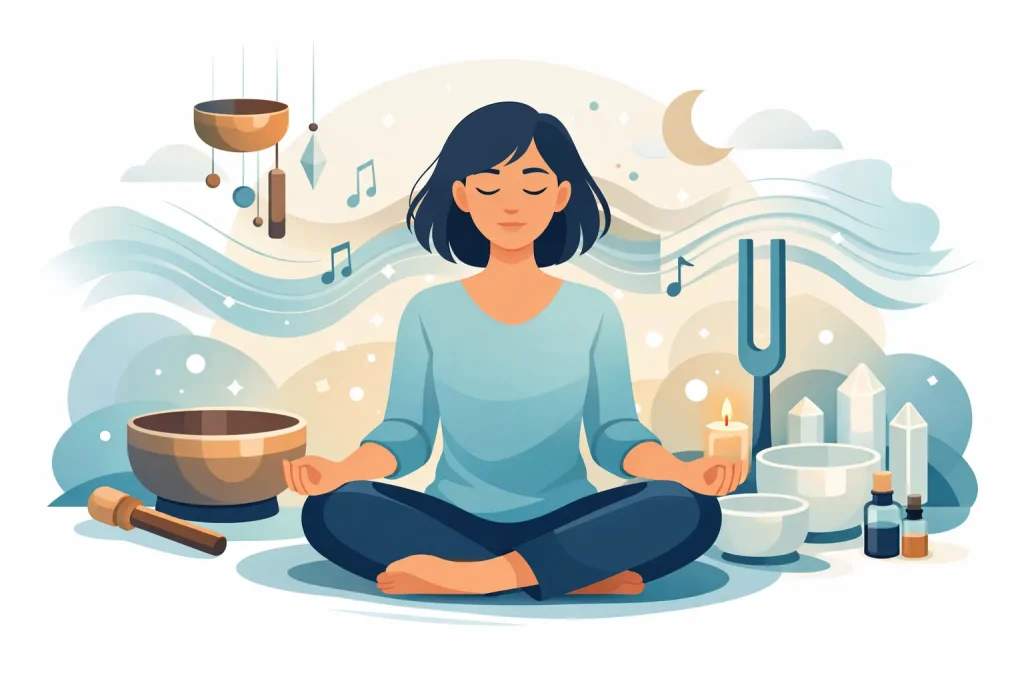
An anxious mind rarely asks permission before it arrives. It can move into the body as a tight chest, a restless jaw, shallow breathing, or the feeling that your thoughts are running a few steps ahead of you. This is where many people begin to notice the sound healing benefits for anxiety – not as a dramatic cure, but as a gentle way to interrupt overstimulation and return to the present.
Sound has always shaped how a space feels. A sharp notification can create tension in a second. A soft bell, a chime in the wind, or a steady tone can do the opposite. For people who are trying to build more calm into daily life, sound healing offers something simple and direct: an experience the body can respond to before the mind has finished analyzing it.
Why sound can calm an anxious nervous system
Anxiety often lives in the gap between where you are and where your attention keeps going. Sound can help close that gap. When you listen to a sustained, soothing tone, your focus has something stable to rest on. That shift may seem small, yet it matters. Attention is no longer scattered across ten worries at once. It begins to gather.
Part of the appeal of sound healing is that it does not require perfect concentration. You do not have to be highly skilled at meditation. You do not need a completely quiet mind. You only need a willingness to listen. For many people, that makes it more approachable than practices that feel effortful when stress is already high.
Certain sounds may also encourage slower breathing and a softer physical state. When the body perceives less threat, muscle tension can ease. Heart rate may settle. The room itself can begin to feel less charged. This is one reason sound is often used in rituals of rest, prayer, meditation, and reflection across many traditions.
That said, the experience is personal. One person may feel deeply soothed by crystal singing bowls, while another responds more readily to low chimes, tuning forks, or soft ambient tones. The benefit is not about forcing a universal sound prescription. It is about noticing which tones help your system feel safe enough to soften.
Sound healing benefits for anxiety in everyday life
The most meaningful sound healing benefits for anxiety are often subtle at first. They show up in the moments that usually feel frayed. You pause before reacting. You breathe more fully. You recover more quickly after stress. Calm becomes easier to access because you have practiced returning to it.
One benefit is grounding. Anxiety can create a sense of being unmoored, as if your mind is hovering somewhere beyond the room you are actually in. Sound brings awareness back through the senses. A clear tone gives you something immediate to notice – the rise, the decay, the vibration, the silence that follows. This can be deeply stabilizing.
Another benefit is emotional regulation. Sound does not erase difficult feelings, but it can create enough space around them that they become easier to hold. Instead of pushing anxiety away, you may find yourself sitting beside it with more steadiness. That shift alone can reduce the secondary fear that often makes anxiety feel bigger.
Sound healing can also support transitions. Many people carry stress from one part of the day into the next without pause. A few minutes with calming sound between work and dinner, before sleep, or after a difficult conversation can signal to the body that one state is ending and another is beginning. These threshold moments are where rituals become powerful.
There is also the environmental effect. Homes absorb energy in subtle ways. Noise, clutter, and constant digital stimulation can leave a space feeling unsettled. Intentional sound changes atmosphere. A chime, a bell, or a resonant tone can make a room feel more spacious, more conscious, and more supportive of rest. This matters because anxiety is not only internal. It is often shaped by the spaces we live in.
What sound healing is – and what it is not
Sound healing is best understood as a supportive practice, not a replacement for mental health care. If anxiety is persistent, severe, or interfering with daily functioning, professional support is important. Sound can complement therapy, medication, breathwork, journaling, and other forms of care. It does not need to compete with them.
It also helps to be realistic. Not every session will feel profound. Sometimes sound creates immediate relief. Sometimes it simply gives you five quieter minutes in a difficult day. Both are valuable. The nervous system tends to respond well to repetition, and benefits often deepen through consistency rather than intensity.
There are trade-offs, too. Some people find certain frequencies overstimulating, especially if they are already feeling fragile or sensory sensitive. Volume, tone, and duration matter. Softer is often better when anxiety is high. The goal is to invite calm, not overwhelm the senses in the name of wellness.
Creating a gentle sound ritual at home
A home practice does not need to be elaborate to be effective. In many cases, simplicity makes it easier to return to. Choose a sound that feels clear, calming, and nonintrusive. That might be a chime near an open window, a tuning fork used with intention, a bowl played softly, or recorded tones you can sit with at the end of the day.
Begin with a few minutes, not an hour. Sit comfortably. Let your shoulders drop. Notice your breath without trying to control it too much. Then listen. Follow the sound as it rises and fades. If your mind wanders, come back to the next tone. This is the practice.
Over time, your body may start to associate certain sounds with safety and rest. This is one reason intentional objects in the home can carry emotional weight beyond their design. They become part of your rhythm. A single clear tone before meditation or sleep can tell your whole system, gently and repeatedly, that it is allowed to settle now.
If you want the ritual to feel more immersive, consider the surrounding environment. Soft lighting, reduced screen exposure, and a tidier visual field can make the experience more supportive. Anxiety is often cumulative. Relief can be cumulative too.
Choosing sounds that feel supportive
There is no perfect sound for everyone, but there are useful places to begin. Chimes tend to create a sense of openness and lightness, especially for people who want their calming practices to feel airy rather than heavy. Singing bowls often feel enveloping and meditative. Tuning forks can feel precise and intentional, which some people appreciate when they want a focused reset.
Natural sound also matters. Wind, rain, birdsong, and moving water can be deeply regulating because they connect the nervous system to patterns that feel organic rather than mechanical. For some, this kind of sound healing feels less like a formal practice and more like a return.
The best choice often depends on the kind of anxiety you are carrying. If your thoughts are racing, sustained tones may help slow internal momentum. If you feel numb or emotionally flat, brighter sounds may bring a sense of presence. If you are easily overstimulated, sparse and gentle sounds are usually the wiser path.
This is where discernment matters more than trend. A spiritually meaningful practice should still feel good in your actual body. If it does not, adjust it.
The deeper value of sound healing benefits for anxiety
At its heart, sound healing invites relationship – with breath, with space, with sensation, and with the present moment. Anxiety often narrows perception until everything feels urgent. Sound can widen that frame. It reminds you that not every moment requires reaction. Some moments only ask to be heard.
For people who care deeply about the atmosphere of home, this can be especially meaningful. Calm is not only something you chase outside yourself. It can be cultivated in the rooms where you wake, work, rest, and begin again. Thoughtful sound becomes part of that ecology of peace.
This is part of what makes intentional objects so resonant in a daily wellness practice. At Sakral Chimes, the idea is not simply to fill a room with beautiful sound. It is to create moments of presence that soften the emotional texture of everyday life.
If anxiety has made your inner world feel loud, you may not need more force. You may need a tone gentle enough to meet you where you are, and clear enough to guide you back to yourself.