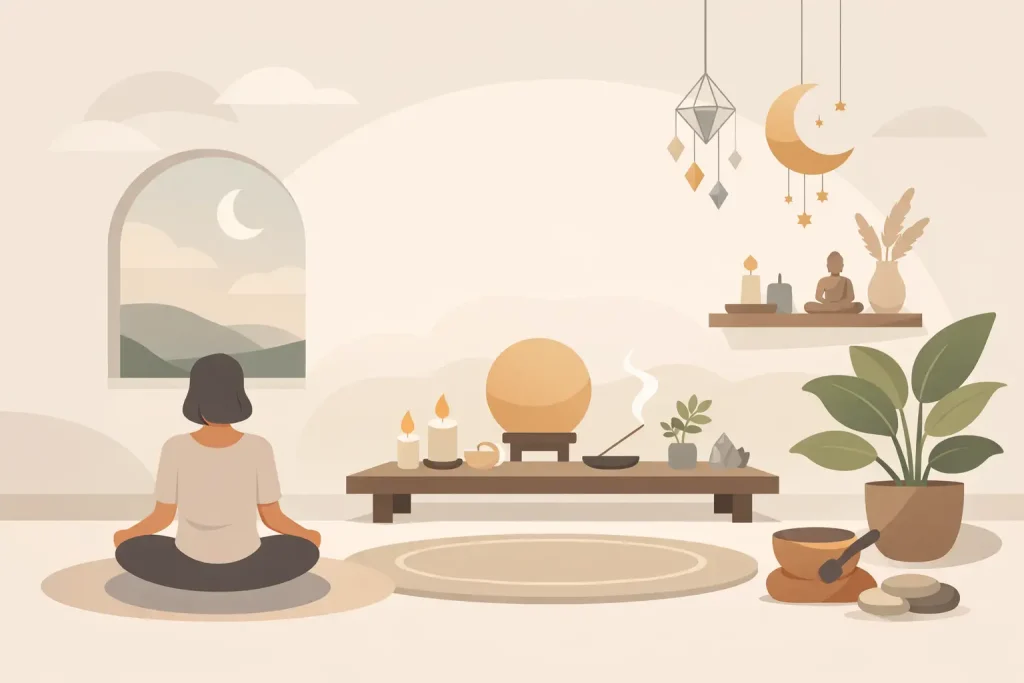
A room can be beautifully styled and still feel unsettled. A sacred space is different. It does not rely on perfection, square footage, or expensive objects. It asks for presence. This guide to creating sacred spaces begins there – with the quiet shift from decorating a corner to dedicating it.
For some, that space is a meditation nook by a window. For others, it is a bedside table arranged with a candle, a meaningful stone, and a small chime that softens the edges of the day. Sacredness is less about rules and more about relationship. The space becomes holy because you return to it with intention.
What makes a space feel sacred
A sacred space is not defined by one tradition or visual style. It can feel spare and modern, warm and layered, or deeply rooted in ritual objects gathered over time. What matters is the emotional atmosphere it holds. When you enter, your breath slows. Your attention sharpens. The room asks less of you.
That feeling usually comes from a combination of sensory clarity and personal meaning. The light is gentle. The sounds are calming rather than jarring. The objects are chosen rather than accumulated. Even a very small area can create this effect when it reflects devotion, remembrance, or inner stillness.
There is also a difference between a sacred space and a multipurpose corner that happens to include a candle. Sacred spaces carry a subtle boundary. They tell your mind and body that something different happens here. You rest here. You pray here. You listen here. You come back to yourself here.
A guide to creating sacred spaces with intention
The first step is not shopping. It is noticing. Walk through your home and pay attention to where your nervous system softens. A certain chair in the morning light. A windowsill that catches the sunset. A quiet stretch of floor in the bedroom before anyone else is awake. Sacred spaces often begin in places that already hold a natural sense of ease.
Once you choose the location, let the purpose become clear. Some spaces are meant for meditation and silence. Others support journaling, grief work, prayer, breathwork, or simply a daily pause. If the purpose is too broad, the energy can feel unfocused. If it is too rigid, the space can start to feel performative. A gentle, honest intention is enough.
Then simplify. Remove what competes for your attention. Visual noise affects the spirit as much as the eye. This does not mean the space must be empty. It means each element should earn its place. When a sacred space is crowded, it can lose its center.
Start with one anchor
Every sacred space benefits from an anchor – one object or feature that holds the emotional tone of the area. It may be a cushion, an altar cloth, a meaningful photograph, a bowl for offerings, or a sound element that signals transition. The anchor gives the space coherence.
For many people, sound creates that center more powerfully than visuals alone. A soft chime, a tuning fork, or any resonant object can mark the threshold between ordinary activity and intentional stillness. The point is not performance. It is repetition. When the same tone opens your practice each day, the body learns to settle more quickly.
Let the senses work together
Sacred environments are deeply sensory. Light, texture, scent, and sound shape emotional response almost immediately. If the overhead light feels harsh, the space may never become restorative. If the fabric feels synthetic and cold, your body may stay alert instead of receptive.
Choose materials that feel grounding. Linen, cotton, ceramic, wood, stone, and glass all carry a quiet presence. Natural textures tend to support sacred spaces because they do not overstate themselves. They invite touch without demanding attention.
Scent can help, but lightly. Incense, essential oils, or a candle can create a ritual cue, though it depends on your sensitivity and the size of the room. Too much fragrance can overwhelm rather than calm. The same is true of sound. A single clear tone often does more than a constant stream of background music.
Creating emotional safety in your sacred space
One of the most overlooked parts of a guide to creating sacred spaces is emotional safety. A space may be beautiful and still not feel safe enough for real stillness. If you are always half-listening for interruptions, or if the area is associated with stress and unfinished tasks, the nervous system may stay guarded.
That is why location matters. A sacred space does not have to be isolated, but it should feel protected. Sometimes that means choosing a bedroom corner instead of the living room. Sometimes it means placing a screen, plant, curtain, or shelf nearby to create a sense of enclosure. Even subtle boundaries can change how a space feels.
It also helps to release the idea that the space must always look perfect. Sacredness is not fragility. It is steadiness. A folded blanket, a used journal, a candle burned halfway down – these signs of life can make the space feel more intimate, not less. The goal is not display. The goal is return.
How sound deepens a sacred atmosphere
Sound is often what transforms a peaceful room into a truly intentional one. Silence has its own power, of course, but gentle sound can help the mind cross over from activity into awareness. It gives shape to the invisible.
Chimes are especially effective because they do not linger heavily. They shimmer, then fade. That arc mirrors many sacred practices: arrival, presence, release. A well-placed chime near an entry, window, or altar can become part of a daily rhythm, marking the beginning of meditation, the close of the evening, or a simple reset after difficult moments.
The key is discernment. Not every sound belongs in every space. Deep, sustained tones may feel grounding in one home and too intense in another. Higher tones may feel cleansing, though in some rooms they can read as bright rather than soothing. It helps to listen carefully and notice what the body does. If your shoulders drop, the sound is likely supporting the space.
For those drawn to a more refined sensory ritual, this is where a brand like Sakral Chimes feels at home – not as decoration alone, but as part of the atmosphere of intentional living.
Keep symbolism personal, not borrowed
Sacred spaces often include symbols, but not every meaningful room needs many of them. In fact, too much symbolism can flatten the emotional truth of the space, especially when objects are chosen for appearance rather than connection.
A few deeply resonant pieces will always carry more presence than a collection assembled to fit an aesthetic. That may be a spiritual text, a vessel from a loved one, a shell from a transformative trip, or a handmade object that reminds you of your own inner life. Sacred design becomes more powerful when it reflects your real story.
There is also wisdom in restraint when drawing from traditions outside your own. Reverence asks for care. If an object or symbol has a sacred role within a living tradition, take time to understand its meaning before placing it in your home. Respect deepens atmosphere. Appropriation weakens it.
Let the space evolve with your life
The most enduring sacred spaces are not static. They change as you change. What supported you during grief may not be what you need during renewal. A winter altar may feel different from a summer one. A room once built for solitude may later become a place for shared prayer or quiet conversation.
Allowing the space to evolve keeps it alive. You might rotate objects with the seasons, adjust the lighting, or remove elements that no longer feel true. This does not mean constant redesign. It means listening.
Small rituals help maintain that relationship. Straightening the cloth. Lighting the candle at the same hour. Ringing a chime before sitting down. Opening a window before morning practice. These gestures may seem simple, but they teach the space how to hold you, and they teach you how to arrive.
A sacred space does not need to impress anyone. It only needs to tell the truth gently enough that you can hear it when you enter.