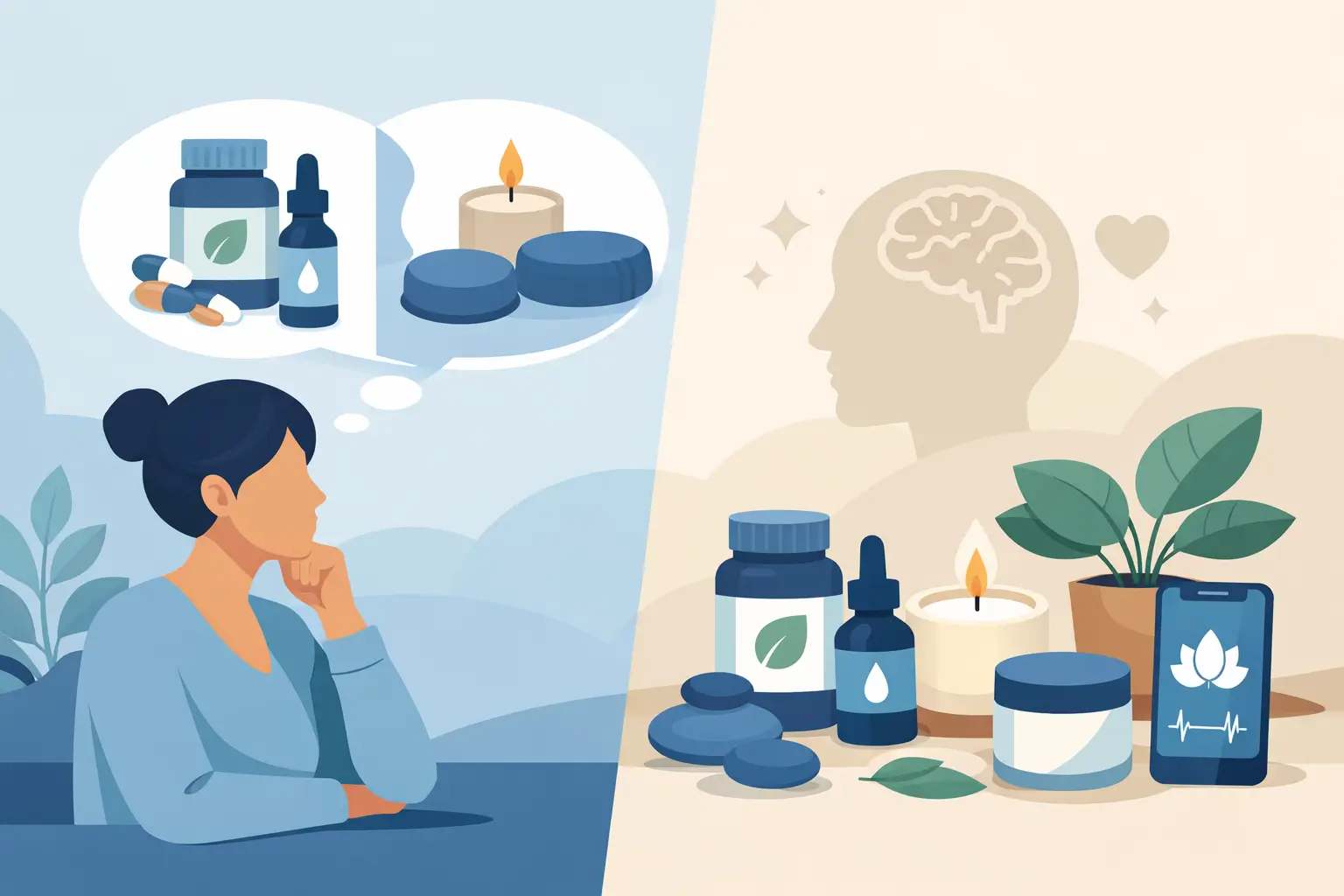
A room can look beautiful and still feel restless. The difference is often subtle – a harsh light, constant visual noise, or the absence of anything that invites you to slow down. The best mental wellness products do not simply fill space. They shape atmosphere, support ritual, and help the nervous system recognize that it is safe to soften.
For people who value intentional living, that distinction matters. A wellness item should not feel like another object asking for your attention. It should offer steadiness. Whether it is placed by a meditation cushion, on a bedside table, or near the front door, its role is quiet but meaningful: to create a small moment of return.
What mental wellness products actually do
Mental wellness products are often described in broad terms, but their real purpose is more personal. They help create conditions that support emotional balance, focus, rest, and grounding. That does not mean a product can replace therapy, medical care, or inner work. It means the right object can become part of an environment that makes those practices easier to sustain.
This is why some products work beautifully for one person and feel unnecessary to another. Mental wellness is not a single state. Some people need help settling anxious energy. Others need support with focus, sensory comfort, or transitions between a busy day and a restful evening. The most useful product is the one that meets your actual pattern, not the one that happens to be trending.
There is also a difference between distraction and nourishment. A product that gives a quick mood lift may still leave your space feeling cluttered or overstimulating. A more thoughtful choice often works in a gentler way. It becomes part of the rhythm of your day rather than a temporary fix.
Start with the feeling you want to create
Before choosing anything, pause on the emotional outcome. Do you want your space to feel quieter, warmer, more grounded, more sacred, or more spacious? That question is often more useful than asking which category is best.
If your home feels mentally noisy, calming sound tools, soft lighting, or pared-back sensory elements may help. If your mornings feel scattered, you may be drawn to products that create structure, such as a dedicated meditation object, a journal placed where you will actually use it, or a small sound ritual that marks the start of the day. If evenings feel heavy, comfort-based pieces can support decompression.
When people skip this step, they often buy attractive items that do not truly serve them. The object may be lovely, but it does not change the atmosphere in a meaningful way. Intention is what turns a purchase into a practice.
The most effective mental wellness products tend to support the senses
The mind responds to environment through the senses first. That is why the most enduring mental wellness products are often the ones that shape sound, light, touch, and visual calm.
Sound is especially powerful because it influences a space without adding visual clutter. Gentle chimes, sound tools, and resonance-based objects can signal transition, invite presence, and soften the mental grip of a busy day. For some people, a clear, delicate tone becomes a reminder to breathe. For others, it marks the beginning of meditation or the close of work. The effect is not about dramatic transformation. It is about repetition and association.
Light matters just as much. Cool, bright overhead lighting can keep the body alert even when the mind is asking for rest. Warmer, softer light creates a more restorative tone. The same is true of texture. Natural materials, smooth surfaces, and objects with a quiet tactile quality often bring more comfort than synthetic or visually harsh alternatives.
Scent can also be supportive, but it depends on sensitivity. One person may find a subtle aroma deeply grounding, while another may feel overwhelmed by it. This is where personal awareness matters more than any universal rule.
Choose products that invite ritual, not accumulation
A common mistake in wellness shopping is collecting too many tools without using any of them consistently. A shelf full of good intentions can become its own source of guilt. The better approach is to choose fewer pieces that naturally fit your day.
Ritual does not need to be elaborate. It can be as simple as striking a tuning fork before journaling, listening to a chime in the morning before checking your phone, or dimming the lights at the same hour each evening. The product serves the ritual, and the ritual shapes your mental state.
This is where design becomes important. If an item feels visually intrusive, cheaply made, or disconnected from your home, you may not keep it in view. And if it disappears into a drawer, it usually disappears from your routine as well. The most supportive products are often the ones that feel beautiful enough to leave out, simple enough to use, and meaningful enough to return to.
How to evaluate quality in wellness objects
In a category shaped by emotion and aesthetics, quality can be harder to judge than in purely functional goods. Still, a few things matter.
First, notice the material presence of the piece. Does it feel calm, durable, and intentional? Premium wellness products usually communicate care through restraint. They do not need to overstate their purpose. Their finish, tone, and form speak for themselves.
Second, consider the sensory experience. If it is a sound-based object, the sound should feel clear rather than jarring. If it is a decor-oriented piece, it should contribute to visual ease rather than compete for attention. If it is meant to support rest or meditation, it should feel effortless to incorporate.
Third, ask whether the product aligns with your real life. A beautiful object that requires perfect conditions may not be practical. A mental wellness product should reduce friction, not add it. Sometimes the most supportive choice is not the most elaborate one. It is the one you will reach for on an ordinary Tuesday.
A thoughtful home is part of mental care
We often separate emotional wellbeing from the physical environment, as if mindset exists apart from place. In reality, the spaces we inhabit shape us constantly. They affect how quickly we exhale, how easily we focus, and whether we feel held or drained at the end of the day.
That is why home-based wellness products can be so effective when chosen well. They meet you where you already are. You do not need to wait for a retreat, a class, or the perfect morning. A resonant chime by the window, a grounding object near your mat, or a quiet corner arranged with care can change the emotional quality of daily life.
For a spiritually oriented home, symbolism matters too. Some people want objects that feel sacred, not just useful. They are drawn to pieces that carry meaning through sound, form, or placement. There is nothing trivial about that. Beauty can steady the mind. Reverence can soften stress. When a product reflects your inner values, it often becomes easier to stay connected to them.
When less is more
Not every space needs multiple layers of wellness products. In fact, if your environment already feels full, adding more may work against the calm you want. Sometimes one carefully chosen object can do more than five loosely connected ones.
This is especially true for people who are sensitive to stimulation. Too many scents, sounds, colors, or visual focal points can feel busy rather than soothing. If that sounds familiar, choose one primary sensory anchor. It might be a single sound object, a dedicated meditation candle, or one area of the home designed around rest and reflection.
A brand like Sakral Chimes naturally speaks to this quieter philosophy – that what you bring into your space should earn its place through beauty, resonance, and emotional depth.
Let your choices reflect your inner pace
There is no perfect formula for building a more restorative environment. Some people need silence. Others respond to tone, ritual, and sacred detail. Some want visible reminders to pause, while others prefer products that blend almost invisibly into the room.
The question is not which mental wellness products are most popular. It is which ones help you feel more present in your own life. Choose the objects that lower the volume, honor your senses, and make calm feel more available. A well-chosen piece will not ask you to become someone new. It will simply help you return to yourself, more often and with more ease.