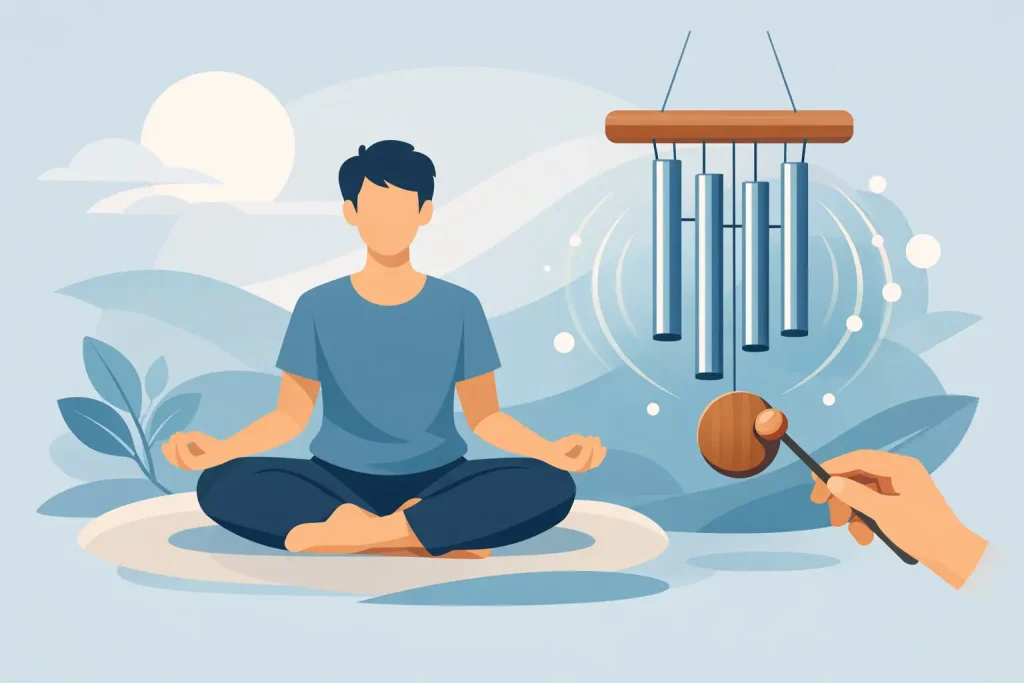
A single clear tone can change the feeling of a room faster than words. It asks nothing from you except attention, and that is exactly why people often wonder how to use meditation chimes in a way that feels natural rather than performative.
Meditation chimes are simple, but their effect can be profound. They create a gentle threshold between ordinary activity and intentional presence. Whether you meditate for two minutes before work or hold a longer evening ritual, the chime becomes a cue for the nervous system. Over time, that cue starts to mean settle, soften, return.
How to Use Meditation Chimes in a Daily Practice
The most common way to use a meditation chime is at the beginning and end of your session. One strike at the start signals that you are entering a quieter inner space. One strike at the end signals re-entry, giving your mind a softer landing than an abrupt alarm or a glance at the clock.
If you are new to meditation, keep it very simple. Sit comfortably, take one full breath, then sound the chime. Let the tone fade completely before doing anything else. That small pause matters. It invites listening before effort.
At the end of your practice, ring the chime again and resist the impulse to move right away. Listen until you can no longer hear the sound. Then notice what remains in the silence after it. For many people, that lingering stillness becomes just as important as the chime itself.
Some people also use chimes at intervals during meditation. This can be helpful if you want gentle structure without breaking concentration. A soft chime every five or ten minutes can bring your awareness back when the mind drifts. The trade-off is that frequent sound can feel supportive for some practitioners and distracting for others. If your attention tends to become overly alert around sound, fewer chimes may serve you better.
Choose the Right Moment, Not Just the Right Sound
Meditation chimes are not only about timing. They are also about placement within a ritual. You can use them to mark transitions that often pass unnoticed – the shift from work to rest, from conversation to solitude, from scattered thinking to breath.
A morning practice might begin with opening the curtains, lighting a candle, and sounding the chime once. An evening practice may be quieter and more grounding, with the chime used after dimming lights and setting down your phone. The sound becomes part of a rhythm your body learns to trust.
If you practice yoga, breathwork, prayer, or journaling, chimes can also frame those moments. They do not need to belong only to seated meditation. In many homes, the most meaningful use is simply to create a clear beginning. Intentional living rarely needs more complexity. It usually needs a more conscious start.
When a Chime Helps Most
Chimes are especially helpful when your mind feels overstimulated. A gentle tone offers a single point of focus that is easier to receive than a spoken instruction. It can also support people who struggle with transitions. If you often rush into meditation while mentally carrying the day with you, a chime gives the mind a bridge.
That said, there are days when silence itself is the better teacher. If any external sound feels like one more demand on your attention, skip the chime. The practice should support your state, not impose a mood that is not there.
Create a Simple Ritual Around the Chime
The most effective rituals are the ones you will actually return to. You do not need a formal altar or a long routine. You need consistency and sincerity.
Begin by placing your chime somewhere visible and easy to reach. If it lives in a drawer, you are less likely to use it. Keep it near the cushion, chair, mat, or corner of the home where you naturally pause. Beauty matters here. When an object feels aligned with your space, you are more likely to treat the moment with care.
Before sounding the chime, take one or two breaths without changing anything. Let your posture settle. Then ring it with a light, deliberate touch. You are not trying to produce volume. You are inviting clarity.
After the tone fades, choose one anchor for your practice. That might be the breath, a mantra, bodily sensation, or simple listening. The chime is not the whole meditation. It is the doorway.
How Strongly Should You Ring It?
A softer tone is usually more effective than a sharp one. Meditation chimes work best when they feel spacious, not startling. If the sound makes your body tense, it is probably too forceful.
Room size matters too. In a small bedroom or quiet studio, a light strike may be enough. In a larger room or group setting, you may need a slightly fuller tone so the sound carries. The right volume is the one that gathers attention without gripping it.
Using Meditation Chimes for Timed Sessions
Many people prefer chimes to standard timers because they feel gentler and less mechanical. If you use a meditation app or device with interval bells, think of the chime as an extension of the room rather than a command from outside it.
For short practices, one sound at the beginning and one at the end is often enough. For longer sits, an occasional chime can help mark phases. You might begin with a tone, sit in silence, then hear another tone at the halfway point as an invitation to begin again.
There is no perfect formula. Some practitioners find interval chimes deeply grounding because they reduce the urge to check time. Others feel pulled out of stillness each time they hear one. Let your own nervous system decide.
If you teach meditation, lead yoga, or hold small gatherings, chimes can be especially elegant. They offer guidance without overexplaining. A clear tone can signal arrival, a transition into rest, or the close of a shared practice with grace.
How to Use Meditation Chimes With Intention
The deepest value of a meditation chime is not sound alone. It is meaning repeated with care. When you use the same tone in the same spirit, day after day, it begins to carry memory. The body recognizes it before the mind has to interpret it.
You can give your chime a quiet purpose. Some people associate the opening tone with release and the closing tone with gratitude. Others use it as a cue to return to the present whenever emotions feel scattered. This does not need to be mystical to be meaningful. Attention itself is a sacred act.
If spiritual symbolism is part of your practice, the chime can mark the crossing into a more reverent state. If your approach is more practical, it can still serve as a sensory tool for focus and regulation. Both are valid. The sound does not require a single philosophy.
Common Mistakes to Avoid
The most common mistake is overcomplicating the ritual. If you spend more time arranging the experience than inhabiting it, the chime becomes decoration rather than practice.
Another mistake is using it inconsistently and expecting it to feel powerful right away. Its effect often deepens through repetition. A chime heard once is pleasant. A chime woven into daily rhythm becomes grounding.
It also helps to avoid treating every session the same. Some mornings call for one clear tone and ten quiet breaths. Some evenings need a longer sit and a slower close. Intentional practice includes responsiveness.
Let the Sound Teach You How to Listen
Meditation chimes are often associated with peace, but their real gift may be refinement. They sharpen your ability to notice the fading edge of a tone, the texture of silence, and the subtle shift in your own energy before and after you listen.
That is why they belong so naturally in a home devoted to calm. They are not just tools for meditation. They remind you that atmosphere is created through small repeated choices. A single sound, used with care, can soften the threshold between doing and being.
At Sakral Chimes, that understanding lives at the heart of the ritual. The object matters, but the experience matters more.
If you are just beginning, start with one strike at the start of your practice and one at the end. Let it be enough. Over time, you may find that the chime is not there to fill the silence, but to help you trust it.